THE WEIGHT OF THINGS
TOM VERITY
TOM VERITY3 - 11 February, 2017

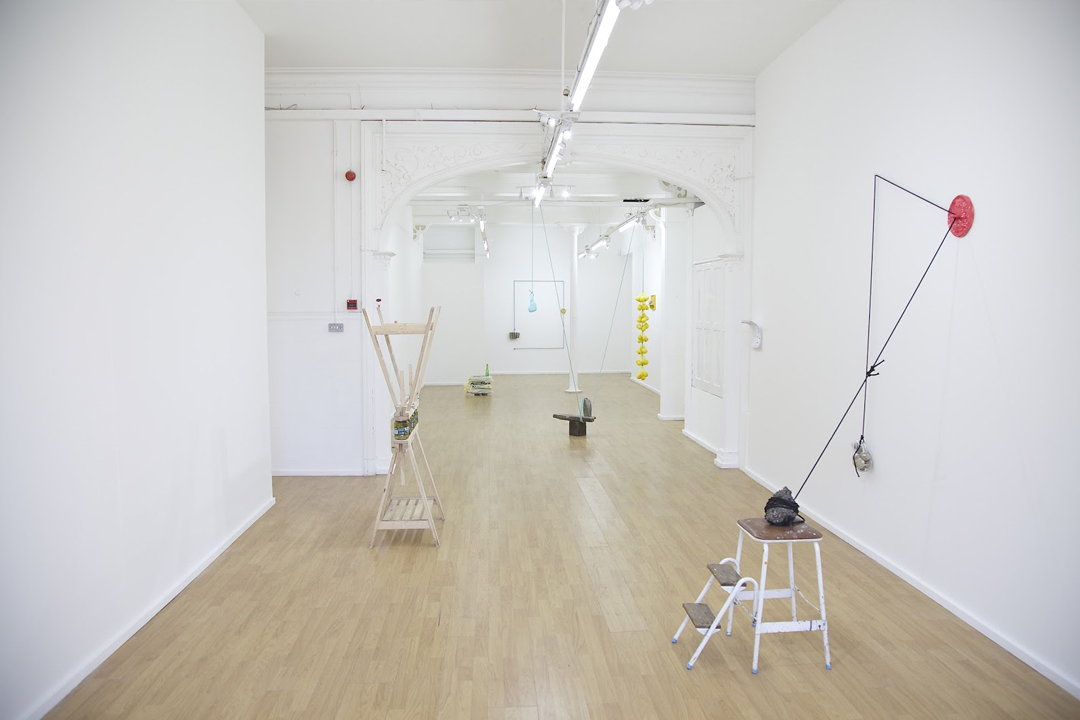
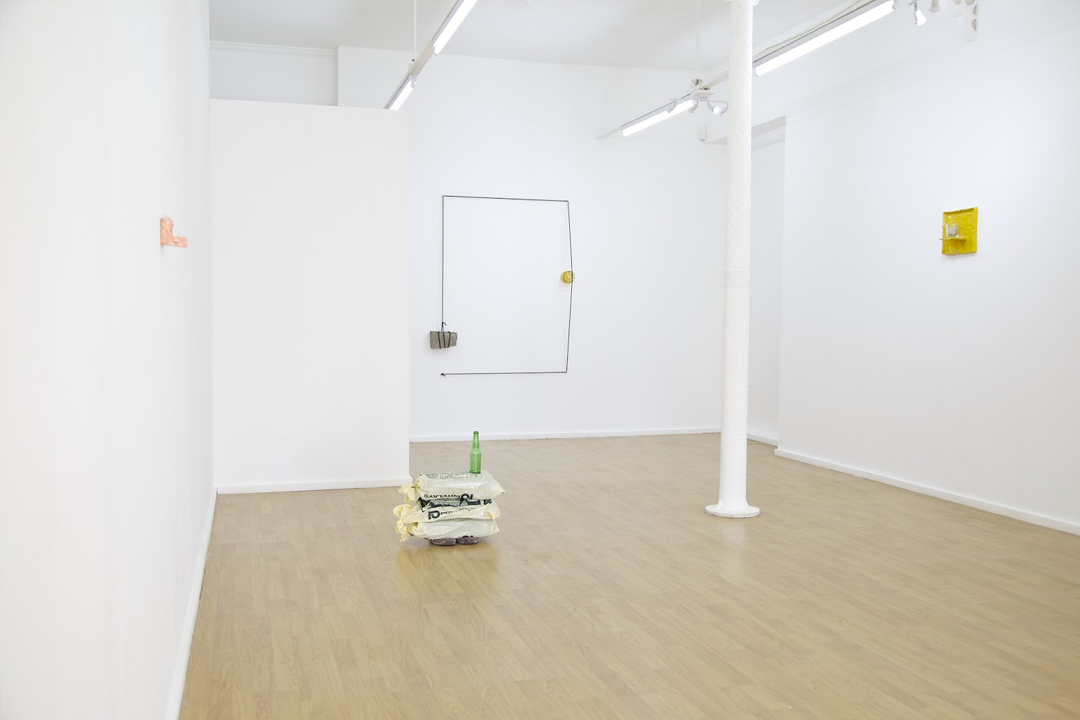
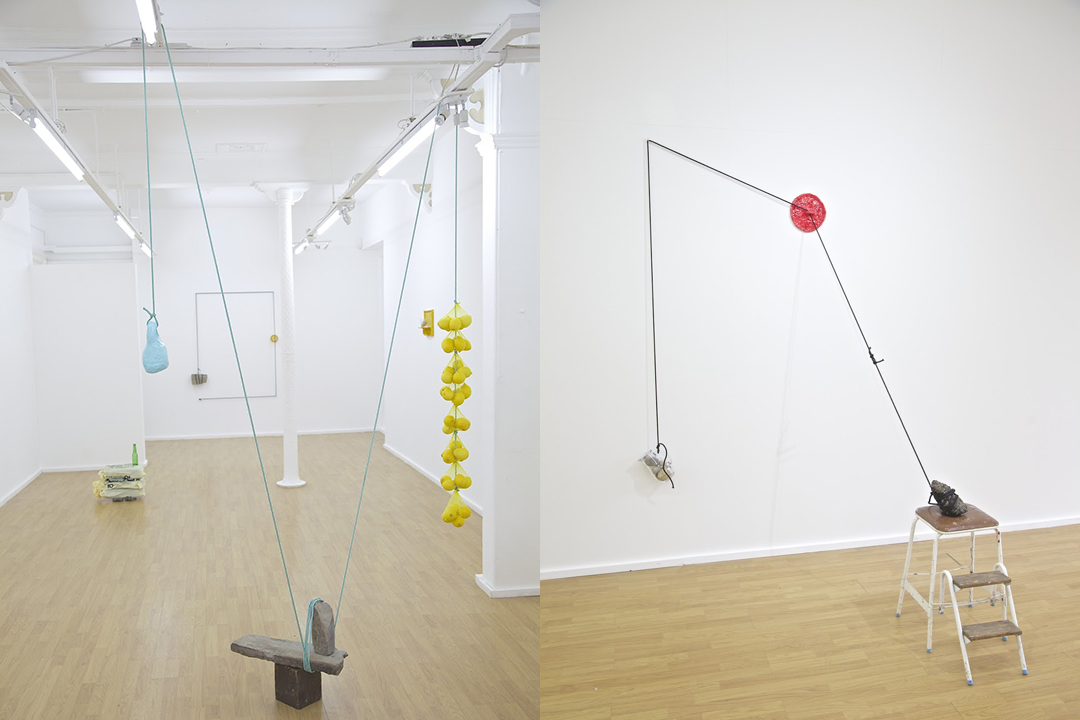
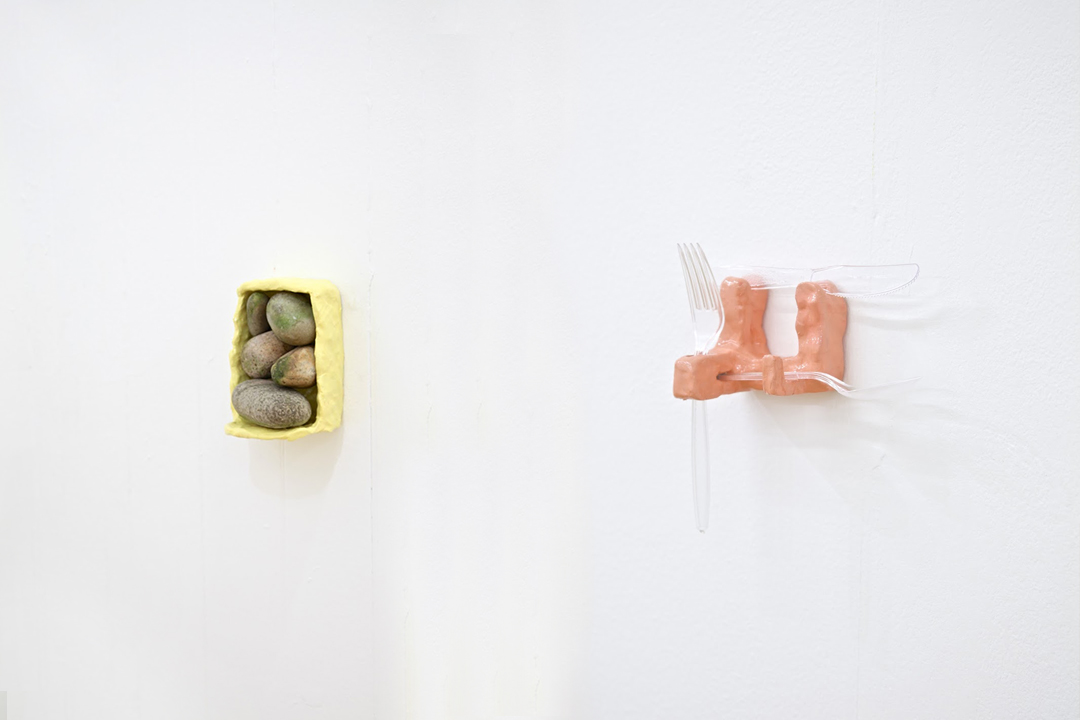
During his six-month residency at AirSpace Gallery, Tom Verity has investigated the position of materials and objects in the world, asking questions about how we assign value to the functional and ornamental and challenging his relationship to such objects whilst making sculpture. Working with clay for the first time and focusing on its particular qualities of tactility and weight, the resulting sculptures, produced in Stoke on Trent, combine everyday objects like ceramic mugs and glass vases and their kind of corresponding 'raw' materials like clay and rocks; seeking to to investigate the value of such materials once collided back together, often trapped under their own weight, both physically and metaphorically.
It is a curious paradox that even the most materialist of us tend to value what might be called the useless above the useful. Useful not in the sense of being without purpose, but without utility
– Deyan Sudjic
Mass-produced every day objects are re-evaluated through the removal of their function leaving them to be viewed as aesthetic objects as well as taking on structural roles. The hand made clay pieces are used as support structures for other elements of the work by being used as shelves or plinths, re assigning the value of a hand made object beneath the everyday objects. None of the clay used in the show is fired and has been air-dried then painted with household enamel paints, this allows the material to be worked in a variety of ways which would not be possible in a kiln as well as making the process much more direct aligning with Michael Deans desire to make “democratic ceramics”. In some of the works items of clothing or other delicate material is trapped within the weight of the sculptures. These crushed positions relate to the human condition and incite a desire to free the trapped material but know that it would destroy the sculpture.
- Tom Verity
THE WEIGHT OF THINGS
An exhibition review
by Selina Oakes
Exploring the positioning and culturally assigned value of objects throughout his six-month residency, artist Tom Verity invites audiences to spend time with a selection of everyday, mundane items and materials in his first major solo show. A plastic cutlery set, six gherkin jars, well-rounded pebbles, bags of lemons and glassware, all pander their way throughout the gallery space. Curiously, these familiar household objects are animated by a series of rope mechanisms and hastily tied knots, often made taut by faux-ceramic clay weights. Closely mirroring the exhibition's apt title, The Weight of Things, many of the works assess the heavy expectations and associations that humans have historically placed on objects and materials. In removing items from their everyday environ and engaging them in a menagerie of playful balancing acts, Verity demonstrates a secondary use for both ornamental and functional objects. Alongside the reassembly of an object hierarchy, the tactile differences of machine-made, hand-crafted and natural items are also addressed.
Balance & Trappings
Beckoning the viewer into the gallery space is a vibrant cassis-coloured clay boulder. It stands proudly in the street-level window and pulls tightly on a black rope that rears a sturdy wooden chair onto its hind-legs. Meanwhile, a roughly-cut concrete slab rests on the chair and an egg-timer shaped vase mimics the boulder's actions at a closer proximity. Reminiscent of a suspended section of Fischli & Weiss's The Way Things Go, this assemblage entitled Tilt fervently presents an alternative activity for everyday and ornamental objects. As though to play with themes of motion and halted time, Verity presents a moment in which each object counter-balances the other – something that is indicative of equality and signals the potential to create an equilibrium within chaos. Similarly Trapped Glass, found at the opposite end of the gallery, provides audiences with the precarious scenario of fragile glassware horizontally held between a wall and a taut piece of rope: it is a contemplative scene that has the potential to be chaotic and yet is far from it. Notably, its title highlights the fact that many objects, like the glassware, appear to be trapped under the 'weight' of their new configurations. The theme of balance is ever-present in Pickle Juice and Hanging Garden where items are temporarily placed, not secured, together. The latter's 'balance scale' composition of bagged-up lemons opposite a pastel-blue clay mass also mimics the weighing out of items and the comparative valuing (buying and selling) of raw materials.
Imitative Ceramics
The Weight of Things provides a bountiful offering of both playfulness and poise. There is a wonderfully humorous quality to the artist's handmade clay objects, none of which are traditionally fired. Instead, they are air-dried and coated with gleaming enamel paint – an imitation of freshly glazed ceramic-ware that is familiar in the region of Stoke-on-Trent. In deciding not to carry out common finishing processes, Verity distances his items from the city's weighty heritage and offers an alternative life for a readily-available material. From a distance, the coral painted clay handle found in Line Hanger, as well as Tilt's plum mound, reminds the viewer of high-quality, ornate items. It is only on closer inspection, together with the clay's positioning as structural instead of aesthetic, that the viewer reevaluates its worth. In turn, however, whilst distancing itself from ornamental valuation in its new configuration, it is part of an artwork: something that is more commonly aesthetic than functional. The clay's newly adopted structural guise could be contradicted by the fact that it forms a part of an exhibited artwork: a thing to observe and contemplate.
Readymade & Minimalist
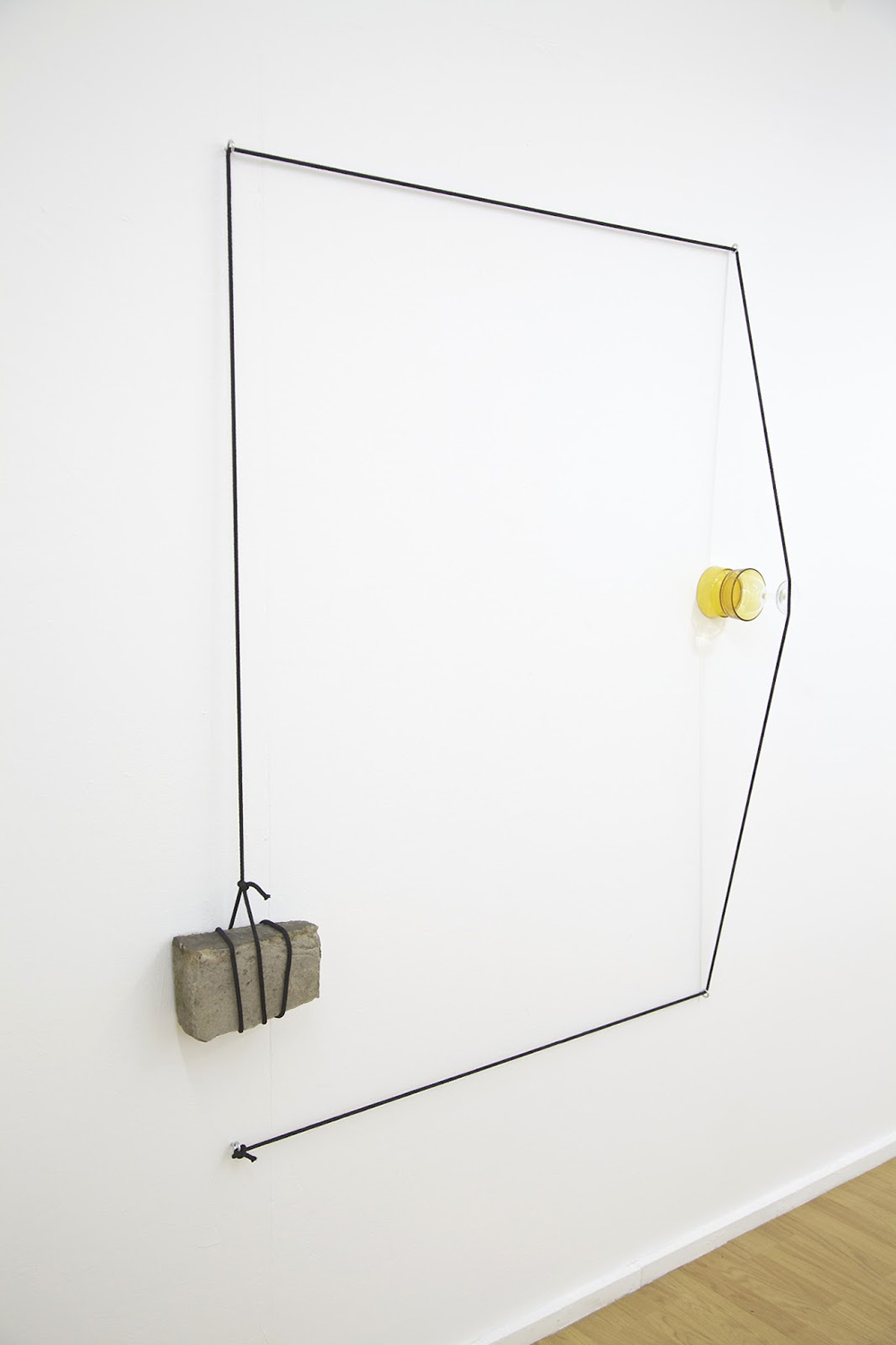
A brief reflection upon the long history of the readymade can be made when experiencing these works: the everyday repurposed as art; speckles of Duchamp's Bicycle Wheel shining through in the incorporation of minimalist furniture as plinths for items. Verity's work sits within an ever-expanding readymade dialogue. However, what sets the artist apart is an interest in presenting items as democratic things: to have them humbly reconsidered on equal grounds within sequential, almost collaborative set-ups. A perfect example of this is Line Hanger. Its short flight of stool steps and stern-looking black rope lead the viewer's eye on a linear journey up from the ground, along to the white wall, towards a clay wall fixing, and back down to a weighty household jug piled high with smoothly, rounded pebbles. Each sculptural element plays a vital role in the assemblage, working together with no item more important than any other. Again, clay adopts a structural role in the work and a household jug becomes an aesthetic vitrine in which to display discarded stones. We are reminded of the artist's playful interest in object and material languages, particularly the specific connotations attached to materials due to their origin and subsequent uses. Notable in both Line Hanger and Trapped Glass is the relationship between machine objects (e.g. glassware) and raw materials (sedimentary rock). Verity hints at the earthly origins and interwoven histories of things such as rocks, clay and glass.
Present throughout his practice is the use of black rope, which can be seen as a tool for drawing, as well as an instrument for bridging the gap between two- and three-dimensionality. This, alongside the curated zig-zagging of artworks down the gallery space, reiterates a sense of tension between two counterparts. Line Hanger and Trapped Glass actively guide the viewer's gaze between the gallery's two- and three-dimensional spaces through the use of black rope that resembles the graphic lines of 20th century minimalist painters (Stella or LeWitt perhaps). However, whilst these artists relied on the edge of the canvas to halt a drawn line, Verity places a heavy object to punctuate its end.
Personified Humour
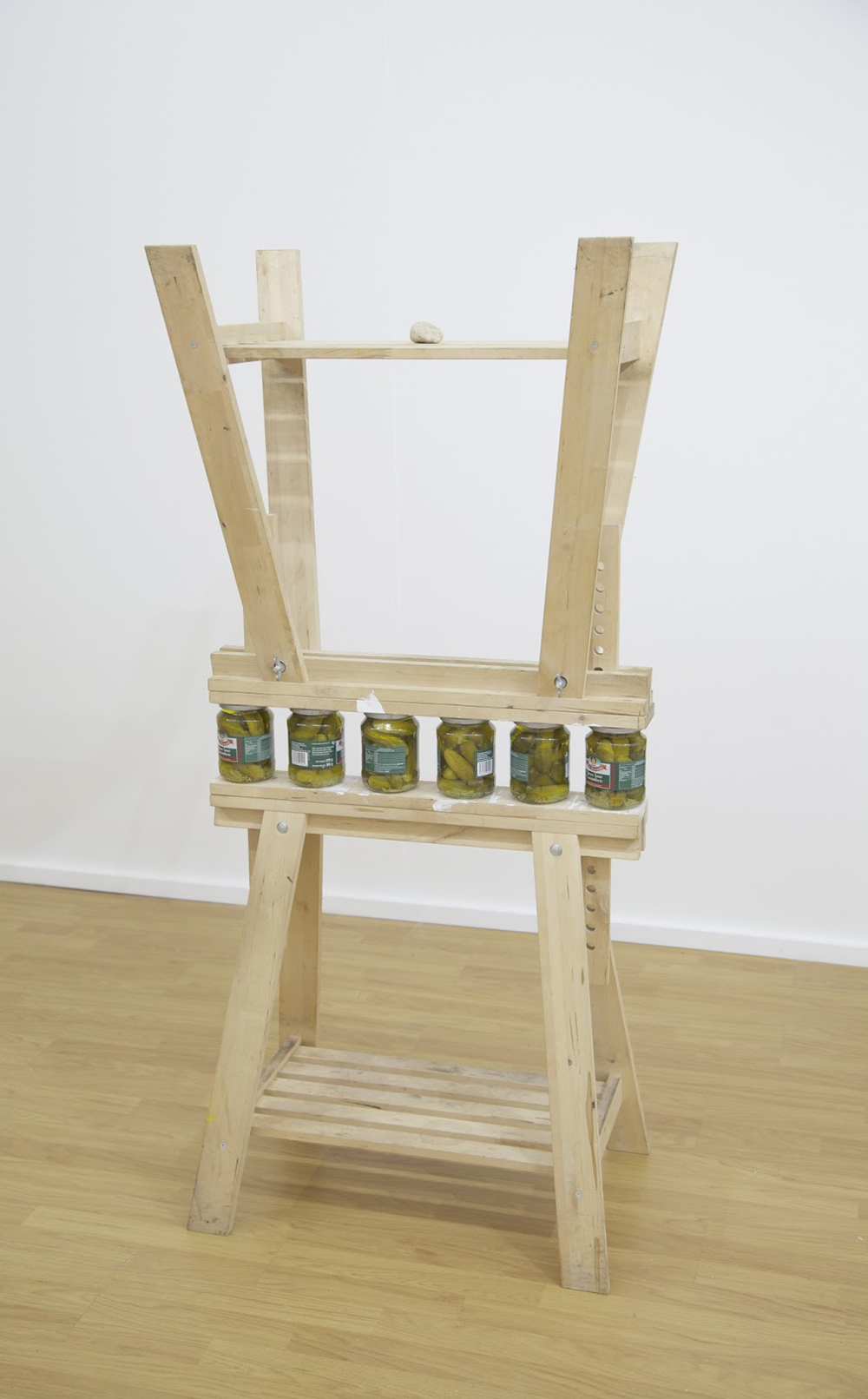
Standing adjacent to Line Hanger is Pickle Juice and its six gherkin barrels which mediate the inverted meeting of two sets of table legs: the display set-up for a miniature, perfectly rolled, ball of clay. Alongside the humorous and almost personable quality of each object, the clay, and it's typically ornamental and 'high-interest' status, is undermined and its value appears reduced – this time due to its scale rather than where it is positioned. It is curious to observe that in other works, the ornamental value of clay is withdrawn through its repurposing as a structural item. Here, its value shifts due to its purposefully raw (no bright, enamel paint) and minute appearance. Again, a commentary on materials and their value is questioned through the meeting of the hand-made (clay), the mass-produced (table legs and jars) and the naturally formed (gherkins). In works such as Wall Mount, this comparison is exaggerated: a bright yellow, hand-molded clay wall mount displays a machine-made drinking glass containing a pebble. It reverses the expected display sequence, whilst also highlighting the idea of time: a pebble has taken decades to be formed, whereas a machine-cut glass took minutes.
Bringing the pieces into a collective show is an underlying awareness of the personification of each item. Drawing the objects away from their traditional purpose stimulates a peculiar notion that they have alternative characters that we, as users and manufacturers of these objects, should get to know. Souvenirs from a Picnic does exactly this: it invites audiences to pay attention to throw-away items such as plastic cutlery. Whilst its title hints at the sentimental worth and memories often attached to items by humans, it also reiterates the switching of object and material positioning: clay becomes the support structure for cheap, disposable things.
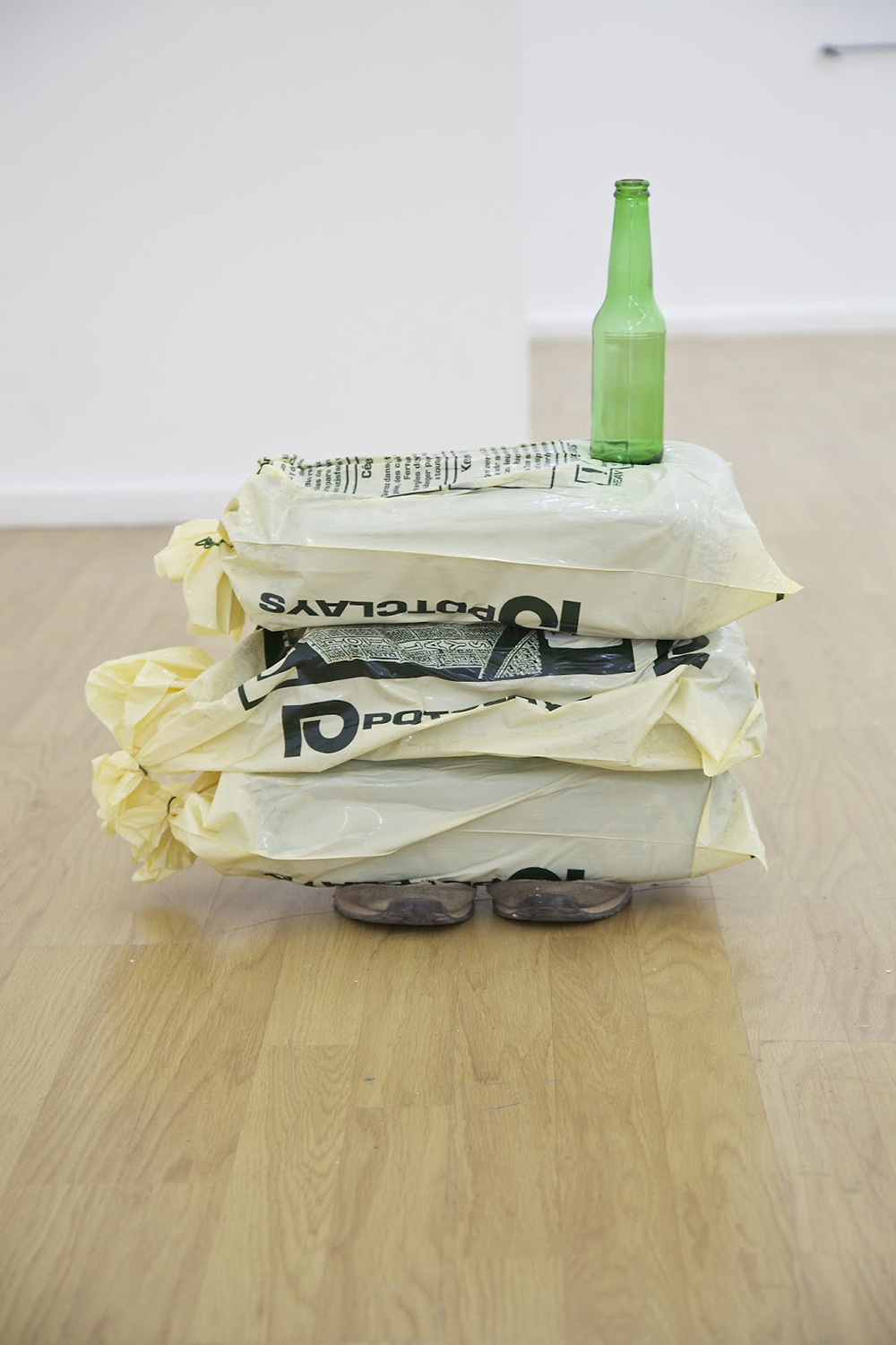
A more obvious nod to humankind's relationship to these sculptures is made in Stacks Daniel, where a disowned pair of trainers is crushed beneath the weight of packeted clay blocks which support the display of a single, green bottle – an item that is machine-made and freely disposable. It poses the question, where do we place ourselves within the hierarchy? Have we become trapped beneath our own expectations and ideals of what objects mean to us? Or perhaps, it is merely a set-up to disassociate footwear with their allocated purpose: they become structural rather than functional. Regardless, any attempt to withdraw the shoes would result in the collapse of the sculpture; another theme running throughout the show. The idea that these items are linked to our habitual ways of living is reiterated in the artist's hand-molded clay forms that are littered with fingerprints, which also exude nostalgia for forgotten tactility in an era of mass-production.
Weaving a complex series of themes and expectations of what object, materials and everyday things mean to us today, Verity's graduate residency show subtly breaks down and regroups historical display etiquettes. The exhibition alerts audiences to the restrictive valuations that humankind assigns to objects, and in turn presents an opportunity for the viewer to delve into the alternative life these materials could lead. It enables a reflection upon different valuation systems favouring time over material, and structural instead of ornamental. A cohesive showcase that gracefully leads the viewer through the gallery space, The Weight of Things excels in its ability to configure disparate things into poised sequences that illustrate a new aesthetic and functional purpose for disposable entities.
IN CONVERSATION with TOM VERITY
Preparing for his first major solo show, Graduate Resident Tom Verity took time out from his install schedule to speak about his time living and working as an artist in Stoke-on-Trent. After completing his studies at Camberwell College of Art in 2016, Tom relocated to the West Midlands to begin his six month residency. Bringing with him a plethora of ideas fresh from his graduate show, Tom set about developing his interest in the value and positioning of objects and materials through an experimental period, where he explored the structural and tactile worth of found items alongside the malleability of locally sourced clay. His upcoming show, The Weight of Things, places a selection of works produced during his residency in a whitewall context, enabling pieces of all sizes to interact with the exhibition space whilst celebrating their own individual worth. Pickled gherkins, angular ropes and handmade clay forms all encourage the viewer to question the stereotypical uses and sequential assemblage of everyday things.
AS: I'd like to start by asking what first drew you to apply to the residency at AirSpace Gallery?
Tom: Both AirSpace and Stoke-on-Trent were new to me when I applied to the residency through Artquest. I was applying for lots of things after graduation, saw this, and thought it would be a good opportunity. It's ideal because it's specifically for graduates so you know that you're not going to be competing against more established artists. I thought I'd just go for it, so I sent off an application, participated in the interview, and moved to Stoke. Sometimes you've just got to take a chance. At the beginning, I didn't know anyone in the city or how it would all work out.
AS: How did you find adjusting to a new city, away from your home in Bristol and university city, London? How did you find the process of finding a place, and carrying on with your practice after art school in a new environment?
Tom: Moving to the city was pretty easy. It's quite hard to find a furnished house here, but we (Tom and fellow resident Jack) managed to find one near the university. After Camberwell, I had a brief stopover in Bristol, so by the time I got here I was ready to start making again. It's great to have a studio where I get to work, and to also have the support of the AirSpace directors, who we meet with once a month. An elected mentor also comes in once every three months and talks to you about your work. It's quite different to university: when you're studying there are people around everyday and you have frequent discussions about your practice. Here, it's much less, and you end up following a set path in your own head rather than lots of people offering you little bits of feedback – which can be both good and bad.
AS: Staying on the subject of having a studio space and supervisory meetings, how did you find the level of support, for example, were the meetings with your mentor Kevin Hunt useful?
Tom: I had really great experience with Kevin, and it was a much better relationship than I've had with any tutor. It felt as though he put in a lot of effort to come to Stoke and to provide me with some constructive feedback – this motivated me to take his suggestions on board. The mentoring has definitely improved the work; each session rebooting it in some way. I just had another meeting on Sunday, and now I'm feeling more confident about the show. It would have looked completely different, I think, if he hadn't helped me, specifically with the curation. I've learnt a lot about creating tension in the space and using it in a way that is beneficial to both the space and the artwork. The gallery at AirSpace is a difficult space to work with in some respects because it has a central pillar as well as a few nooks and crannies. Kevin was good in saying that you don't have to use these situational quirks in a really obvious way. We've created, I think, a really contemporary looking show – perhaps one that you don't see very often in Stoke.
AS: Earlier today, we were talking about how filling a whole space on your own can be a little bit daunting, and to have pieces in development that really use the gallery can be challenging. What was your approach to this?
Tom: Yes, Kevin was really good in telling me to be more confident in the work, because if you're not that confident with it, you can end up filling the space with all of your work. Kevin and I talked about paring it back and not putting everything in. The idea is to let the artwork have space around it and to be confident that it can hold the wall. For example, there's a really small 10cm clay piece in the show that is displayed on about eight metres of wall. It's about saying that this piece is good enough to warrant this wall.
AS: It sounds as though this experience has given you the confidence to curate things in new and experimental ways. This leads into my next question: how has your practice developed since graduating from Camberwell, particularly in these last six months?
Tom: Important changes have occurred concerning my use of clay – it was a material that I wanted to use but didn't know how to work with it. Earlier, I was using clay too much and now, I've learnt how to use it sparingly so that it has more of an impact. Prior to this I was composing found objects together, and so there was no hand crafting involved like there is with clay. A block of clay can become anything and you have to form it – it has infinite possibilities, whereas something like rope goes from point A to B, and you just decide what happens in the middle.
AS: Clay, like you say, is something very malleable and you have the final say over its shape whereas, for example, a glass bottle is already formed. A lot of your work uses readymade and found items to address the value and positioning of objects. I'm interested to hear how clay combined with these readymade objects continues this thematic pursuit?
Tom: This theme is the core of the work, but it's not overly obvious in the show. In earlier pieces, where I was making clay plinths for items, it was almost too literal. The main idea behind this is that clay – a typically ornamental thing – can been used as a structural item. By placing clay beneath a manmade or machine-made object, I seek to play with the audience's expectation of seeing a handmade item at the top of a pile. It's also about touch: the clay is molded by hand and contains traces of my handprints (something that the machine-made object does not have). In later works, I've tried to experiment with these differences in more subtle ways.
AS: It's questioning the value that people place on ornamental objects, and flipping the norm.
Tom: Yes, for example glass is a material often used to display something else (as a glass vitrine or shelf). In my work it's being displayed on something like a handmade clay shelf. I'm putting more artistic effort into making the support material than the thing that is going to be on display. It's meant to confuse the viewer who becomes more interested in the support structure than the item on show. Whilst the show itself moves away from this, the prominent theme of the difference of touch between clay and the item that the clay supports remains.
AS: Not to stay on the subject of clay for too long, but I wanted to ask about its connection to Stoke-on-Trent's heritage. Was the use of clay a conscious decision when you came to Stoke; did you feel drawn to the city's ceramic history, or was it something that you were interested in before?
Tom: The reason why I used, or continued to use clay in Stoke was because of its availability in the city. There's Potclays down the road, where you can get hundreds of bits of clay, so it's an easy material to get, but I wasn't drawn to the history of it really. I knew that it was a very conscious material of the city – it's in everyone's minds – so I knew to be a little bit careful with it. That's why there are much fewer clay or ceramic pieces in the final show.
AS: It's interesting how the work is removed from the city's heritage due to its usage, but then again it's always going to have certain connotations with it, perhaps.
Tom: Yes it will, I think if it's made in the city, it will do, but maybe it's good that I can offer an alternative use for the material. It might get people to think about it in a different way. The majority of artists in the city are ceramic artists, and it might be interesting to have a fine artist giving an opinion on how the material can be used, as a material, away from more traditional processes.
AS: We've spoken about readymade and found objects. Is there anywhere in particular that you look for these items? How do you select your objects?
Tom: A lot of it comes from our house – it's a furnished place filled with things from past tenants – and more comes from the gallery and it's garden, like the rocks. Generally, I try to combine an everyday household object with the malleable clay and a raw material, like stones or wood, so that you have a variety of different materials that can be judged against each other. I select mundane materials that everyone is aware of, but isn't scrutinised in day-to-day life; cups, mugs and little glassware things that aren't highly valued.
AS: In a way, you're elevating these objects.
Tom: Yes, and using them in a secondary way that they're not meant to be used in. So, this glass vase (points to work) has become a structural element rather than an ornamental thing. And there's some pickle jars in the show that I use in a supportive way too, to hold it together – so again, they're being asked to do a different thing to what they're intended to do, which forces you to look at them in a different light.
AS: You've mentioned some of your work in development, but what do you anticipate for your upcoming show? What can audiences expect to see or experience in The Weight of Things?
Tom: I think people should come with an open mind. They're going to see what I've made in the last six months in Stoke-on-Trent, and whilst it may not be directly connected to the city, there are things that have been made during my time here. I've not even been thinking about the end product really.
AS: Well, there isn't always an end product, the work is often in development. Can you describe some of the pieces that are going to be in the show?
Tom: There's a really small piece made out of clay. It's intended to be a specific display holder for disposable cutlery: a knife, fork and spoon. The piece is about spending time doing something for objects that aren't normally held in a high regard; creating a structure for them to be displayed and observed in a new way. It's also humorous as the audience is spending time with objects that don't normally have time spent on them. Another piece in the show features a little clay box filled with stones. The work was experimental when I made it, but on reflection it highlights the touch of both materials: the stone has been worn away over thousands of years to become a pebble, and it's being held inside a box that I've made in half an hour from loosely molded clay. The interplay between a slowly formed object and a very fast, quickly formed object is something that I've found quite interesting.
AS: Prior to this exhibition, you had an interim show in December. Was the interim helpful and how did you develop the transition from one show to the other?
Tom: It was helpful to hang the work and see what it looks like. From the interim show there are two slightly altered pieces that are going to move into the new show. The interim helped me to see what the work looked like in an exhibition context, and to figure out the parts that I was most interested in. It helped to have a test show, which included making a poster and writing an exhibition text. The mid-term deadline was useful as I had to have pieces finished rather than have them floating about the studio. It's also an opportunity for people to see what you're doing during the residency and open some communication between the public and you. It keeps everyone up to date, including yourself.
AS: Can you describe some of the challenges that you've encountered during the residency, and how you've overcome these?
Tom: I think a lot of the challenges are just general ones, like moving to a new city, not really knowing anybody and meeting new people. The good thing about the residency is that you have the studio, so whatever happens, you've got a place where you can work. Other challenges.. in London, there are thousands of shows that you can go to every weekend, but here, you're a little bit on your own in terms of context. On the other hand, its good that Birmingham, Liverpool and Manchester are so close, and you can take day trips to neighboring cities. But there are a lot of people here, and they're all really welcoming.
AS: Having lived in the city for the last six months, what will you take away with you? Do you think you'll stay in Stoke, and what will you take away with you from the residency?
Tom: A lot of it will come from the mentoring that I received from Kevin, that's where I've gained the most during the residency, but I know that I've learnt lots more from just being able to make work. I've definitely developed a lot more as an artist, which is really great to have the opportunity to get the ground running and to stabilise my practice into something that I can be confident in. I've made a few friends, and I'll be staying until March. Then, in June, I'm going to Iceland.
AS: That leads me onto my next question: how do see your work progressing and what do have planned on the horizon next, Iceland sounds exciting?
Tom: In terms of progressing with the work, I'm looking forward to some decompression time, because on the residency I've just been producing as much as I can. I'm looking forward to not having a deadline and to have time to think about the work at a slower pace. I'll take a little break, but not for too long. I'm happy with the work and I've just got to figure out what aspects of it I'm most interested in and how to keep doing it. In June, I'm going to Iceland on a one month residency, something that I've had planned since last summer. From my time at AirSpace, I've definitely learnt about being on a residency and how to be natural with it. You've got to just take it as it comes and try not to overthink the work. Then after that, I don't know what's going to happen, back to England and then, I could live in Bristol or I could move to Liverpool. It feels a little as though I've moved the scary part of graduation to now.
AS: Perhaps, but it has given you the time to continue with your practice and to build a certain confidence that now you feel more prepared to pursue it. What advice can you offer to future graduate residents?
Tom: Similar to what I was saying, don't think too much about it, just come in and let the work happen naturally, don't try to make work that's specifically for the city just because you're here. It's good to live with the other resident, because then you've got one person that you know, and you can move outwards from there. It's great that everyone is interested to meet the annual residents – they know the situation you're in and they're happy to hang out. Hopefully I can come back and talk to the residents to give them advice in person.
AS: Any last words, where does your work go from here, do you think you''ll carry on using clay?
Tom: I will, because I've found a way of using the dry clay with enamel paint that has a nice finish, and I've found the level at which it should be in my work. My practice before the residency was a little bit colder: I was into minimalism, constructivism and strong forms. This is why I brought clay into my work – it acts as a handmade counter element to that harsh minimalist language. It's good to have an element of something that creates a more tension, so that it's not just all strong form, and there is something a little more interesting there.
-------------------------
Tom Verity was born in Bristol and graduated from Camberwell College of Art in 2016. His work investigates the position of materials and objects, asking questions about how we assign value to functional and ornamental objects. His works have been shortlisted for three major awards (Bloomberg New Contemporaries, Woon Art Prize and the SOLO award) and this, his first solo exhibition, has been supported by a successful GFA Arts Council Application.
------------------------
The AirSpace Gallery Graduate Residency Scheme, running since 2012, seeks to tackle graduate retention in Stoke-on-Trent and offers new arts graduates an opportunity to bridge the gap between education and a professional arts career. Residents receive free personal studio space for 6 months, and full access to the Gallery's facilities. There is an emphasis on professional development, with a series of monthly mentoring meetings, led by Gallery directors and invited artists. The scheme offers two exhibition opportunities within the Gallery - an interim exhibition in the AirSpace Window Space or Resource Room and the final all-important solo exhibition which is produced and curated with tailored assistance from a professional artist identified through conversation between the resident and the gallery directors.
It is a curious paradox that even the most materialist of us tend to value what might be called the useless above the useful. Useful not in the sense of being without purpose, but without utility
– Deyan Sudjic
Mass-produced every day objects are re-evaluated through the removal of their function leaving them to be viewed as aesthetic objects as well as taking on structural roles. The hand made clay pieces are used as support structures for other elements of the work by being used as shelves or plinths, re assigning the value of a hand made object beneath the everyday objects. None of the clay used in the show is fired and has been air-dried then painted with household enamel paints, this allows the material to be worked in a variety of ways which would not be possible in a kiln as well as making the process much more direct aligning with Michael Deans desire to make “democratic ceramics”. In some of the works items of clothing or other delicate material is trapped within the weight of the sculptures. These crushed positions relate to the human condition and incite a desire to free the trapped material but know that it would destroy the sculpture.
- Tom Verity
THE WEIGHT OF THINGS
An exhibition review
by Selina Oakes
Exploring the positioning and culturally assigned value of objects throughout his six-month residency, artist Tom Verity invites audiences to spend time with a selection of everyday, mundane items and materials in his first major solo show. A plastic cutlery set, six gherkin jars, well-rounded pebbles, bags of lemons and glassware, all pander their way throughout the gallery space. Curiously, these familiar household objects are animated by a series of rope mechanisms and hastily tied knots, often made taut by faux-ceramic clay weights. Closely mirroring the exhibition's apt title, The Weight of Things, many of the works assess the heavy expectations and associations that humans have historically placed on objects and materials. In removing items from their everyday environ and engaging them in a menagerie of playful balancing acts, Verity demonstrates a secondary use for both ornamental and functional objects. Alongside the reassembly of an object hierarchy, the tactile differences of machine-made, hand-crafted and natural items are also addressed.
Balance & Trappings
Beckoning the viewer into the gallery space is a vibrant cassis-coloured clay boulder. It stands proudly in the street-level window and pulls tightly on a black rope that rears a sturdy wooden chair onto its hind-legs. Meanwhile, a roughly-cut concrete slab rests on the chair and an egg-timer shaped vase mimics the boulder's actions at a closer proximity. Reminiscent of a suspended section of Fischli & Weiss's The Way Things Go, this assemblage entitled Tilt fervently presents an alternative activity for everyday and ornamental objects. As though to play with themes of motion and halted time, Verity presents a moment in which each object counter-balances the other – something that is indicative of equality and signals the potential to create an equilibrium within chaos. Similarly Trapped Glass, found at the opposite end of the gallery, provides audiences with the precarious scenario of fragile glassware horizontally held between a wall and a taut piece of rope: it is a contemplative scene that has the potential to be chaotic and yet is far from it. Notably, its title highlights the fact that many objects, like the glassware, appear to be trapped under the 'weight' of their new configurations. The theme of balance is ever-present in Pickle Juice and Hanging Garden where items are temporarily placed, not secured, together. The latter's 'balance scale' composition of bagged-up lemons opposite a pastel-blue clay mass also mimics the weighing out of items and the comparative valuing (buying and selling) of raw materials.
Imitative Ceramics
The Weight of Things provides a bountiful offering of both playfulness and poise. There is a wonderfully humorous quality to the artist's handmade clay objects, none of which are traditionally fired. Instead, they are air-dried and coated with gleaming enamel paint – an imitation of freshly glazed ceramic-ware that is familiar in the region of Stoke-on-Trent. In deciding not to carry out common finishing processes, Verity distances his items from the city's weighty heritage and offers an alternative life for a readily-available material. From a distance, the coral painted clay handle found in Line Hanger, as well as Tilt's plum mound, reminds the viewer of high-quality, ornate items. It is only on closer inspection, together with the clay's positioning as structural instead of aesthetic, that the viewer reevaluates its worth. In turn, however, whilst distancing itself from ornamental valuation in its new configuration, it is part of an artwork: something that is more commonly aesthetic than functional. The clay's newly adopted structural guise could be contradicted by the fact that it forms a part of an exhibited artwork: a thing to observe and contemplate.
Readymade & Minimalist
A brief reflection upon the long history of the readymade can be made when experiencing these works: the everyday repurposed as art; speckles of Duchamp's Bicycle Wheel shining through in the incorporation of minimalist furniture as plinths for items. Verity's work sits within an ever-expanding readymade dialogue. However, what sets the artist apart is an interest in presenting items as democratic things: to have them humbly reconsidered on equal grounds within sequential, almost collaborative set-ups. A perfect example of this is Line Hanger. Its short flight of stool steps and stern-looking black rope lead the viewer's eye on a linear journey up from the ground, along to the white wall, towards a clay wall fixing, and back down to a weighty household jug piled high with smoothly, rounded pebbles. Each sculptural element plays a vital role in the assemblage, working together with no item more important than any other. Again, clay adopts a structural role in the work and a household jug becomes an aesthetic vitrine in which to display discarded stones. We are reminded of the artist's playful interest in object and material languages, particularly the specific connotations attached to materials due to their origin and subsequent uses. Notable in both Line Hanger and Trapped Glass is the relationship between machine objects (e.g. glassware) and raw materials (sedimentary rock). Verity hints at the earthly origins and interwoven histories of things such as rocks, clay and glass.
Present throughout his practice is the use of black rope, which can be seen as a tool for drawing, as well as an instrument for bridging the gap between two- and three-dimensionality. This, alongside the curated zig-zagging of artworks down the gallery space, reiterates a sense of tension between two counterparts. Line Hanger and Trapped Glass actively guide the viewer's gaze between the gallery's two- and three-dimensional spaces through the use of black rope that resembles the graphic lines of 20th century minimalist painters (Stella or LeWitt perhaps). However, whilst these artists relied on the edge of the canvas to halt a drawn line, Verity places a heavy object to punctuate its end.
Personified Humour
Standing adjacent to Line Hanger is Pickle Juice and its six gherkin barrels which mediate the inverted meeting of two sets of table legs: the display set-up for a miniature, perfectly rolled, ball of clay. Alongside the humorous and almost personable quality of each object, the clay, and it's typically ornamental and 'high-interest' status, is undermined and its value appears reduced – this time due to its scale rather than where it is positioned. It is curious to observe that in other works, the ornamental value of clay is withdrawn through its repurposing as a structural item. Here, its value shifts due to its purposefully raw (no bright, enamel paint) and minute appearance. Again, a commentary on materials and their value is questioned through the meeting of the hand-made (clay), the mass-produced (table legs and jars) and the naturally formed (gherkins). In works such as Wall Mount, this comparison is exaggerated: a bright yellow, hand-molded clay wall mount displays a machine-made drinking glass containing a pebble. It reverses the expected display sequence, whilst also highlighting the idea of time: a pebble has taken decades to be formed, whereas a machine-cut glass took minutes.
Bringing the pieces into a collective show is an underlying awareness of the personification of each item. Drawing the objects away from their traditional purpose stimulates a peculiar notion that they have alternative characters that we, as users and manufacturers of these objects, should get to know. Souvenirs from a Picnic does exactly this: it invites audiences to pay attention to throw-away items such as plastic cutlery. Whilst its title hints at the sentimental worth and memories often attached to items by humans, it also reiterates the switching of object and material positioning: clay becomes the support structure for cheap, disposable things.
A more obvious nod to humankind's relationship to these sculptures is made in Stacks Daniel, where a disowned pair of trainers is crushed beneath the weight of packeted clay blocks which support the display of a single, green bottle – an item that is machine-made and freely disposable. It poses the question, where do we place ourselves within the hierarchy? Have we become trapped beneath our own expectations and ideals of what objects mean to us? Or perhaps, it is merely a set-up to disassociate footwear with their allocated purpose: they become structural rather than functional. Regardless, any attempt to withdraw the shoes would result in the collapse of the sculpture; another theme running throughout the show. The idea that these items are linked to our habitual ways of living is reiterated in the artist's hand-molded clay forms that are littered with fingerprints, which also exude nostalgia for forgotten tactility in an era of mass-production.
Weaving a complex series of themes and expectations of what object, materials and everyday things mean to us today, Verity's graduate residency show subtly breaks down and regroups historical display etiquettes. The exhibition alerts audiences to the restrictive valuations that humankind assigns to objects, and in turn presents an opportunity for the viewer to delve into the alternative life these materials could lead. It enables a reflection upon different valuation systems favouring time over material, and structural instead of ornamental. A cohesive showcase that gracefully leads the viewer through the gallery space, The Weight of Things excels in its ability to configure disparate things into poised sequences that illustrate a new aesthetic and functional purpose for disposable entities.
IN CONVERSATION with TOM VERITY
Preparing for his first major solo show, Graduate Resident Tom Verity took time out from his install schedule to speak about his time living and working as an artist in Stoke-on-Trent. After completing his studies at Camberwell College of Art in 2016, Tom relocated to the West Midlands to begin his six month residency. Bringing with him a plethora of ideas fresh from his graduate show, Tom set about developing his interest in the value and positioning of objects and materials through an experimental period, where he explored the structural and tactile worth of found items alongside the malleability of locally sourced clay. His upcoming show, The Weight of Things, places a selection of works produced during his residency in a whitewall context, enabling pieces of all sizes to interact with the exhibition space whilst celebrating their own individual worth. Pickled gherkins, angular ropes and handmade clay forms all encourage the viewer to question the stereotypical uses and sequential assemblage of everyday things.
AS: I'd like to start by asking what first drew you to apply to the residency at AirSpace Gallery?
Tom: Both AirSpace and Stoke-on-Trent were new to me when I applied to the residency through Artquest. I was applying for lots of things after graduation, saw this, and thought it would be a good opportunity. It's ideal because it's specifically for graduates so you know that you're not going to be competing against more established artists. I thought I'd just go for it, so I sent off an application, participated in the interview, and moved to Stoke. Sometimes you've just got to take a chance. At the beginning, I didn't know anyone in the city or how it would all work out.
AS: How did you find adjusting to a new city, away from your home in Bristol and university city, London? How did you find the process of finding a place, and carrying on with your practice after art school in a new environment?
Tom: Moving to the city was pretty easy. It's quite hard to find a furnished house here, but we (Tom and fellow resident Jack) managed to find one near the university. After Camberwell, I had a brief stopover in Bristol, so by the time I got here I was ready to start making again. It's great to have a studio where I get to work, and to also have the support of the AirSpace directors, who we meet with once a month. An elected mentor also comes in once every three months and talks to you about your work. It's quite different to university: when you're studying there are people around everyday and you have frequent discussions about your practice. Here, it's much less, and you end up following a set path in your own head rather than lots of people offering you little bits of feedback – which can be both good and bad.
AS: Staying on the subject of having a studio space and supervisory meetings, how did you find the level of support, for example, were the meetings with your mentor Kevin Hunt useful?
Tom: I had really great experience with Kevin, and it was a much better relationship than I've had with any tutor. It felt as though he put in a lot of effort to come to Stoke and to provide me with some constructive feedback – this motivated me to take his suggestions on board. The mentoring has definitely improved the work; each session rebooting it in some way. I just had another meeting on Sunday, and now I'm feeling more confident about the show. It would have looked completely different, I think, if he hadn't helped me, specifically with the curation. I've learnt a lot about creating tension in the space and using it in a way that is beneficial to both the space and the artwork. The gallery at AirSpace is a difficult space to work with in some respects because it has a central pillar as well as a few nooks and crannies. Kevin was good in saying that you don't have to use these situational quirks in a really obvious way. We've created, I think, a really contemporary looking show – perhaps one that you don't see very often in Stoke.
AS: Earlier today, we were talking about how filling a whole space on your own can be a little bit daunting, and to have pieces in development that really use the gallery can be challenging. What was your approach to this?
Tom: Yes, Kevin was really good in telling me to be more confident in the work, because if you're not that confident with it, you can end up filling the space with all of your work. Kevin and I talked about paring it back and not putting everything in. The idea is to let the artwork have space around it and to be confident that it can hold the wall. For example, there's a really small 10cm clay piece in the show that is displayed on about eight metres of wall. It's about saying that this piece is good enough to warrant this wall.
AS: It sounds as though this experience has given you the confidence to curate things in new and experimental ways. This leads into my next question: how has your practice developed since graduating from Camberwell, particularly in these last six months?
Tom: Important changes have occurred concerning my use of clay – it was a material that I wanted to use but didn't know how to work with it. Earlier, I was using clay too much and now, I've learnt how to use it sparingly so that it has more of an impact. Prior to this I was composing found objects together, and so there was no hand crafting involved like there is with clay. A block of clay can become anything and you have to form it – it has infinite possibilities, whereas something like rope goes from point A to B, and you just decide what happens in the middle.
AS: Clay, like you say, is something very malleable and you have the final say over its shape whereas, for example, a glass bottle is already formed. A lot of your work uses readymade and found items to address the value and positioning of objects. I'm interested to hear how clay combined with these readymade objects continues this thematic pursuit?
Tom: This theme is the core of the work, but it's not overly obvious in the show. In earlier pieces, where I was making clay plinths for items, it was almost too literal. The main idea behind this is that clay – a typically ornamental thing – can been used as a structural item. By placing clay beneath a manmade or machine-made object, I seek to play with the audience's expectation of seeing a handmade item at the top of a pile. It's also about touch: the clay is molded by hand and contains traces of my handprints (something that the machine-made object does not have). In later works, I've tried to experiment with these differences in more subtle ways.
AS: It's questioning the value that people place on ornamental objects, and flipping the norm.
Tom: Yes, for example glass is a material often used to display something else (as a glass vitrine or shelf). In my work it's being displayed on something like a handmade clay shelf. I'm putting more artistic effort into making the support material than the thing that is going to be on display. It's meant to confuse the viewer who becomes more interested in the support structure than the item on show. Whilst the show itself moves away from this, the prominent theme of the difference of touch between clay and the item that the clay supports remains.
AS: Not to stay on the subject of clay for too long, but I wanted to ask about its connection to Stoke-on-Trent's heritage. Was the use of clay a conscious decision when you came to Stoke; did you feel drawn to the city's ceramic history, or was it something that you were interested in before?
Tom: The reason why I used, or continued to use clay in Stoke was because of its availability in the city. There's Potclays down the road, where you can get hundreds of bits of clay, so it's an easy material to get, but I wasn't drawn to the history of it really. I knew that it was a very conscious material of the city – it's in everyone's minds – so I knew to be a little bit careful with it. That's why there are much fewer clay or ceramic pieces in the final show.
AS: It's interesting how the work is removed from the city's heritage due to its usage, but then again it's always going to have certain connotations with it, perhaps.
Tom: Yes it will, I think if it's made in the city, it will do, but maybe it's good that I can offer an alternative use for the material. It might get people to think about it in a different way. The majority of artists in the city are ceramic artists, and it might be interesting to have a fine artist giving an opinion on how the material can be used, as a material, away from more traditional processes.
AS: We've spoken about readymade and found objects. Is there anywhere in particular that you look for these items? How do you select your objects?
Tom: A lot of it comes from our house – it's a furnished place filled with things from past tenants – and more comes from the gallery and it's garden, like the rocks. Generally, I try to combine an everyday household object with the malleable clay and a raw material, like stones or wood, so that you have a variety of different materials that can be judged against each other. I select mundane materials that everyone is aware of, but isn't scrutinised in day-to-day life; cups, mugs and little glassware things that aren't highly valued.
AS: In a way, you're elevating these objects.
Tom: Yes, and using them in a secondary way that they're not meant to be used in. So, this glass vase (points to work) has become a structural element rather than an ornamental thing. And there's some pickle jars in the show that I use in a supportive way too, to hold it together – so again, they're being asked to do a different thing to what they're intended to do, which forces you to look at them in a different light.
AS: You've mentioned some of your work in development, but what do you anticipate for your upcoming show? What can audiences expect to see or experience in The Weight of Things?
Tom: I think people should come with an open mind. They're going to see what I've made in the last six months in Stoke-on-Trent, and whilst it may not be directly connected to the city, there are things that have been made during my time here. I've not even been thinking about the end product really.
AS: Well, there isn't always an end product, the work is often in development. Can you describe some of the pieces that are going to be in the show?
Tom: There's a really small piece made out of clay. It's intended to be a specific display holder for disposable cutlery: a knife, fork and spoon. The piece is about spending time doing something for objects that aren't normally held in a high regard; creating a structure for them to be displayed and observed in a new way. It's also humorous as the audience is spending time with objects that don't normally have time spent on them. Another piece in the show features a little clay box filled with stones. The work was experimental when I made it, but on reflection it highlights the touch of both materials: the stone has been worn away over thousands of years to become a pebble, and it's being held inside a box that I've made in half an hour from loosely molded clay. The interplay between a slowly formed object and a very fast, quickly formed object is something that I've found quite interesting.
AS: Prior to this exhibition, you had an interim show in December. Was the interim helpful and how did you develop the transition from one show to the other?
Tom: It was helpful to hang the work and see what it looks like. From the interim show there are two slightly altered pieces that are going to move into the new show. The interim helped me to see what the work looked like in an exhibition context, and to figure out the parts that I was most interested in. It helped to have a test show, which included making a poster and writing an exhibition text. The mid-term deadline was useful as I had to have pieces finished rather than have them floating about the studio. It's also an opportunity for people to see what you're doing during the residency and open some communication between the public and you. It keeps everyone up to date, including yourself.
AS: Can you describe some of the challenges that you've encountered during the residency, and how you've overcome these?
Tom: I think a lot of the challenges are just general ones, like moving to a new city, not really knowing anybody and meeting new people. The good thing about the residency is that you have the studio, so whatever happens, you've got a place where you can work. Other challenges.. in London, there are thousands of shows that you can go to every weekend, but here, you're a little bit on your own in terms of context. On the other hand, its good that Birmingham, Liverpool and Manchester are so close, and you can take day trips to neighboring cities. But there are a lot of people here, and they're all really welcoming.
AS: Having lived in the city for the last six months, what will you take away with you? Do you think you'll stay in Stoke, and what will you take away with you from the residency?
Tom: A lot of it will come from the mentoring that I received from Kevin, that's where I've gained the most during the residency, but I know that I've learnt lots more from just being able to make work. I've definitely developed a lot more as an artist, which is really great to have the opportunity to get the ground running and to stabilise my practice into something that I can be confident in. I've made a few friends, and I'll be staying until March. Then, in June, I'm going to Iceland.
AS: That leads me onto my next question: how do see your work progressing and what do have planned on the horizon next, Iceland sounds exciting?
Tom: In terms of progressing with the work, I'm looking forward to some decompression time, because on the residency I've just been producing as much as I can. I'm looking forward to not having a deadline and to have time to think about the work at a slower pace. I'll take a little break, but not for too long. I'm happy with the work and I've just got to figure out what aspects of it I'm most interested in and how to keep doing it. In June, I'm going to Iceland on a one month residency, something that I've had planned since last summer. From my time at AirSpace, I've definitely learnt about being on a residency and how to be natural with it. You've got to just take it as it comes and try not to overthink the work. Then after that, I don't know what's going to happen, back to England and then, I could live in Bristol or I could move to Liverpool. It feels a little as though I've moved the scary part of graduation to now.
AS: Perhaps, but it has given you the time to continue with your practice and to build a certain confidence that now you feel more prepared to pursue it. What advice can you offer to future graduate residents?
Tom: Similar to what I was saying, don't think too much about it, just come in and let the work happen naturally, don't try to make work that's specifically for the city just because you're here. It's good to live with the other resident, because then you've got one person that you know, and you can move outwards from there. It's great that everyone is interested to meet the annual residents – they know the situation you're in and they're happy to hang out. Hopefully I can come back and talk to the residents to give them advice in person.
AS: Any last words, where does your work go from here, do you think you''ll carry on using clay?
Tom: I will, because I've found a way of using the dry clay with enamel paint that has a nice finish, and I've found the level at which it should be in my work. My practice before the residency was a little bit colder: I was into minimalism, constructivism and strong forms. This is why I brought clay into my work – it acts as a handmade counter element to that harsh minimalist language. It's good to have an element of something that creates a more tension, so that it's not just all strong form, and there is something a little more interesting there.
-------------------------
Tom Verity was born in Bristol and graduated from Camberwell College of Art in 2016. His work investigates the position of materials and objects, asking questions about how we assign value to functional and ornamental objects. His works have been shortlisted for three major awards (Bloomberg New Contemporaries, Woon Art Prize and the SOLO award) and this, his first solo exhibition, has been supported by a successful GFA Arts Council Application.
------------------------
The AirSpace Gallery Graduate Residency Scheme, running since 2012, seeks to tackle graduate retention in Stoke-on-Trent and offers new arts graduates an opportunity to bridge the gap between education and a professional arts career. Residents receive free personal studio space for 6 months, and full access to the Gallery's facilities. There is an emphasis on professional development, with a series of monthly mentoring meetings, led by Gallery directors and invited artists. The scheme offers two exhibition opportunities within the Gallery - an interim exhibition in the AirSpace Window Space or Resource Room and the final all-important solo exhibition which is produced and curated with tailored assistance from a professional artist identified through conversation between the resident and the gallery directors.